Behind the Gavel: Inside the AMS Judicial System

Written by: Vani Nayyar
When students think about student governance at Queen’s, they may think of clubs, student societies, advocacy, or the AMS Assembly. But behind these more visible parts of student life is another institution with a unique role: the AMS Judicial System.
The Judicial System is an independent branch of the AMS responsible for investigating and adjudicating certain cases involving student conduct and policy infractions. It is composed of two separate bodies: the Judicial Affairs Office (JAO), which serves as the investigative branch, and the Judicial Council (JCOMM), which serves as the adjudicative branch. Think of it like this: the JAO consists of the legal team and the JCOMM is the jury.
Together, these bodies operate independently from the AMS and from one another, providing a judicial process that is designed to be fair, accessible, and community centred.
What makes the system particularly distinctive is its philosophy. Rather than approaching misconduct solely through punishment, the Judicial System is grounded in five core pillars:
Restorative Justice
Peer-Administered
Complaint-Driven
Non-Adversarial
Procedural Fairness
These principles shape how cases are approached, how students are held accountable, and how the system seeks to support the Queen’s community.
A Unique Part of Queen’s History
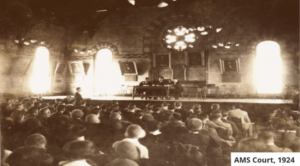
The AMS Judicial System has its roots in the earliest traditions of student governance at Queen’s.
Before the formal establishment of the system, upper-year students were involved in maintaining behavioural standards among younger students. As the university grew, Principal Grant recognized the effectiveness of this peer-led approach. In 1898, the AMS was formally delegated responsibility for managing cases of non-academic misconduct.
While the University continued to establish standards and provide guidance, students were given responsibility for holding their peers accountable.
That history is important; however, the Judicial System is more than a tradition.
Its continued purpose comes from the belief that students should have a meaningful role in upholding the values of the community they are part of.
Two Independent Bodies, One Judicial System
The Judicial System operates through two distinct bodies.
The Judicial Affairs Office is the investigative branch. It administers cases within its jurisdiction, including Non-Academic Misconduct (NAM) cases and Suspected Policy Infractions (SPIs). The JAO has operational independence from the AMS Executives, Board of Directors, and Internal Affairs Office (IAO), meaning these AMS bodies cannot interfere with its investigative mandate.
The Judicial Council is the adjudicative body and follows the Charter of the Judicial Council. When a case cannot be resolved through an appropriate agreement or settlement, it may proceed to a hearing where the Council considers the matter and makes a decision.
Keeping investigation and adjudication separate is an important part of maintaining procedural fairness and avoiding conflicts of interest.
Meet the Judicial Affairs Office
At the centre of the investigative branch are two Judicial Affairs Managers: the Judicial Case Manager and the Judicial Disputes & Policy Manager.
The two positions are equal within the structure of the Judicial Affairs Office and are jointly responsible for the oversight and administration of the office. While both managers are trained to administer judicial matters and can support one another, when necessary, each position has a primary area of responsibility.
Judicial Case Manager
The Judicial Case Manager is primarily responsible for Non-Academic Misconduct (NAM) cases.
NAM cases are referred to the Judicial Affairs Office by Queen’s University’s Non-Academic Misconduct Intake Office (NAMIO). Under the Judicial Policy, the Judicial Case Manager normally serves as the Case Officer for these matters, overseeing the investigation, meeting with respondents, complainants, and witnesses, reviewing relevant information, and presenting matters to the Judicial Council when required.
The Judicial Case Manager therefore plays a central role in ensuring that cases referred through the University’s NAM system are handled in accordance with the applicable policies, procedures, and principles of procedural fairness.
Judicial Disputes & Policy Manager
The Judicial Disputes & Policy Manager primarily oversees Suspected Policy Infractions (SPI) under the Judicial Policy.
SPI cases involve alleged violations of AMS policies or other policies that fall within the jurisdiction of the AMS Judicial System. A case can be initiated following a written notice where there is a reasonable belief that a policy violation occurred. The Judicial Disputes & Policy Manager normally handles these cases, including overseeing investigations and, where appropriate, initiating proceedings before the Judicial Council on behalf of the Society or another appropriate complainant.
This role also reflects the policy-focused nature of SPI cases. Because these matters can involve the AMS, Member Societies, student groups, or individual members, the Judicial Disputes & Policy Manager must have a strong understanding of the policies and governance structures that apply across the Society.
Working Together
Although their primary areas of responsibility are different, the two Judicial Managers are not separate offices. Together, they form the leadership of the JAO and share responsibility for maintaining the integrity and independence of the investigative branch.
The current structure was developed in response to several challenges identified within the previous single-manager model. The restructuring split the office’s managerial responsibilities between two positions, allowing the JAO to draw on a broader range of expertise while also improving continuity, conflict-of-interest management, and the ability of one manager to support the other when necessary.
The structure also strengthens the independence of the JAO. The Judicial Managers report to the Secretary of Internal Affairs (SIA) for administrative support, however, retain full operational independence regarding case management and outcomes.
This distinction is essential: the Secretary of Internal Affairs may provide administrative guidance and ensure the Judicial System complies with its governing policies, however, cannot interfere with the day-to-day handling or outcome of a case.
Together, the two managers provide the foundation for an investigative office that is designed to be independent, accessible, and capable of handling both University-referred misconduct matters and AMS policy disputes.
What Does the Judicial System Handle?
The Judicial System administers Category 1 Non-Academic Misconduct (NAM) cases referred through Queen’s University’s Non-Academic Misconduct Intake Office (NAMIO), as well as Suspected Policy Infractions (SPIs) involving society policies within the AMS’s jurisdiction.
For SPI matters, the process begins with a written complaint. The JAO then determines whether there are grounds for an investigation and, where appropriate, meets with the relevant parties and investigates the alleged policy violation.
Not every case necessarily ends in a hearing.
Where appropriate, the system provides opportunities for informal resolution and settlement. If an agreement is reached and accepted, the case can be resolved without proceeding to a contested hearing. If a resolution cannot be reached, the matter may proceed to the Judicial Council.
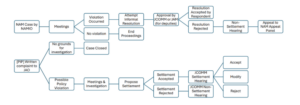
This reflects one of the fundamental differences between the Judicial System and a purely punitive disciplinary process: the objective is not simply to determine what rule was broken, but to determine how the situation can be addressed fairly.
Justice Through Five Core Pillars
The Judicial System is guided by five principles that shape its approach to every case.
Restorative Justice
Restorative justice focuses on the harm caused by misconduct and the people affected by it.
Rather than treating accountability as synonymous with punishment, the process can provide opportunities for dialogue, problem-solving, restitution, apology, community service, and education. The goal is to restore relationships and address the consequences of misconduct wherever possible.
Sanctions are therefore primarily educational or restorative. Depending on the circumstances, they may include restitution, community service, suspension of privileges, fines or bonds, letters of apology, or educational requirements.
Peer-Administered
Students are at the centre of the Judicial System.
A peer-administered model recognizes that students share many of the same experiences, pressures, and environments as the people involved in cases. This can allow students serving within the Judicial System to approach accountability with an understanding of the community they are helping to govern.
It also provides students serving within the Judicial System with an opportunity to develop leadership, judgment, and civic responsibility.
Complaint-Driven
The Judicial System is not intended to operate as a policing service.
The current policy requires a written complaint before formal proceedings begin for policy-infringement matters. This ensures that the system responds to concerns brought forward rather than proactively searching for violations.
Non-Adversarial
The Judicial System seeks to approach cases collaboratively.
Rather than automatically placing students on opposing sides, the system seeks resolutions that balance the interests of everyone involved. This can mean working toward an agreement before a hearing becomes necessary.
Procedural Fairness
Perhaps most importantly, the Judicial System recognizes that everyone involved in a case deserves a fair process.
The Judicial Policy provides protections including written notice of allegations, an unbiased decision-maker, notice of hearings, access to an Advisor or Support Person, the ability to present evidence and arguments, and written reasons for decisions.
These safeguards ensure that accountability does not come at the expense of fairness.
Why Peer-Administered Justice Matters
It is easy to look at a student judicial system and assume that its existence is simply a product of Queen’s history.
But the philosophy behind peer administration goes much deeper.
Students are not simply members of the university community who are subject to its rules. They are also participants in the governance structures that help shape that community.
The Judicial Affairs Office provides students with the opportunity to take responsibility for upholding the values of Queen’s and supporting their peers through an educational and restorative process.
The model also connects student governance with the broader purpose of university education. A peer-led judicial system gives students an opportunity to practice principles such as fairness, accountability, leadership, and civic participation in a real institutional setting.
An Evolving Institution
Being an independent system does not mean being a perfect one.
The Judicial Affairs Office has identified areas where its own processes can continue to improve, including training, records management, conflicts of interest, relationships with university stakeholders, and outreach to students.
Recent work has included strengthening training for Judicial Affairs Deputies and Judicial Council members, establishing regular communication with the Student Conduct Office (SCO), supporting Member Societies with policy revisions, and examining the structure of the Judicial Affairs Office itself. This willingness to evaluate and improve the system is an important part of maintaining trust in an independent judicial process.
Justice as Part of Student Governance
The AMS Judicial System occupies a unique place within Queen’s.
It is a judicial institution, but it is also an example of student governance in practice. It asks students to take on responsibilities that extend beyond representing their peers or organizing events. Students within the system are entrusted with helping uphold community standards, protecting procedural fairness, and supporting accountability.
Its history may begin in 1898, but its purpose remains relevant today.
At its core, the Judicial System is built around a simple idea: a university community should have a fair and meaningful way to address harm, uphold its values, and give its members the opportunity to learn and grow.
That is what makes the AMS Judicial System such a distinctive part of Queen’s student life; not simply that it has existed for generations, but that students continue to play an active role in making justice part of their community.